


The business world is shifting. People are asking new questions. Is a company truly healthy because the numbers look good? Can an organization be called successful if its growth leads to burnout, anxiety, or broken relationships? In our experience, these are not abstract ideas—these are real issues we all feel in workplaces and communities. When we discuss maturity, we are not just looking at age or experience. We look deeper. We believe maturity is reflected in the quality of awareness, the depth of responsibility, and the capacity for ethical, sustainable impact.
Why traditional KPIs are not enough anymore
Key Performance Indicators, or KPIs, have been the heartbeat of business monitoring for decades. They bring tangibility: revenue, profit margins, market share, customer acquisition costs. But as conversations with colleagues and partners often reveal, these measures tell only half the story.
Traditional KPIs focus mainly on output and growth, but rarely ask how these results are created or at what emotional or social expense. We have seen toxic environments where profits soar, yet stress and disengagement run even higher. We have also witnessed workplaces where metrics look steady, but the people behind them are overwhelmed. Something fundamental is missing.
The truth is simple:
Numbers alone cannot reflect maturity.
If we only measure profit and productivity, we ignore the awareness, ethics, and inner climate that drive lasting change. We need new metrics—new KPIs—that measure not just what we do, but how and why we do it.
What we mean by organizational maturity
Organizational maturity is about how consciously and responsibly we lead, decide, and relate. It combines several layers, from personal awareness to collective behavior. When we talk about maturity, we ask:
- How do leaders handle pressure and uncertainty?
- Are decisions made for long-term sustainability or short-term advantage?
- How are emotions managed, and do they ripple positively through teams?
- Is there a culture of open communication and genuine belonging?
- Is value judged only on numbers, or on human well-being as well?
A mature organization can hold both purpose and profit. It can drive results without sacrificing trust or well-being. It takes responsibility for its impact, both externally and within its own ecosystem.
The new landscape: KPIs that measure maturity
So, what would practical measurement look like? What should we pay attention to if we want to create sustainable, conscious organizations? In our view, we need KPIs that capture three main areas:
- Awareness: the quality of presence and mindfulness in leadership and daily work
- Emotional maturity: how well people and systems manage emotions, conflict, and relationships
- Systemic responsibility: understanding and responding to the wider impact of actions, far beyond financial returns
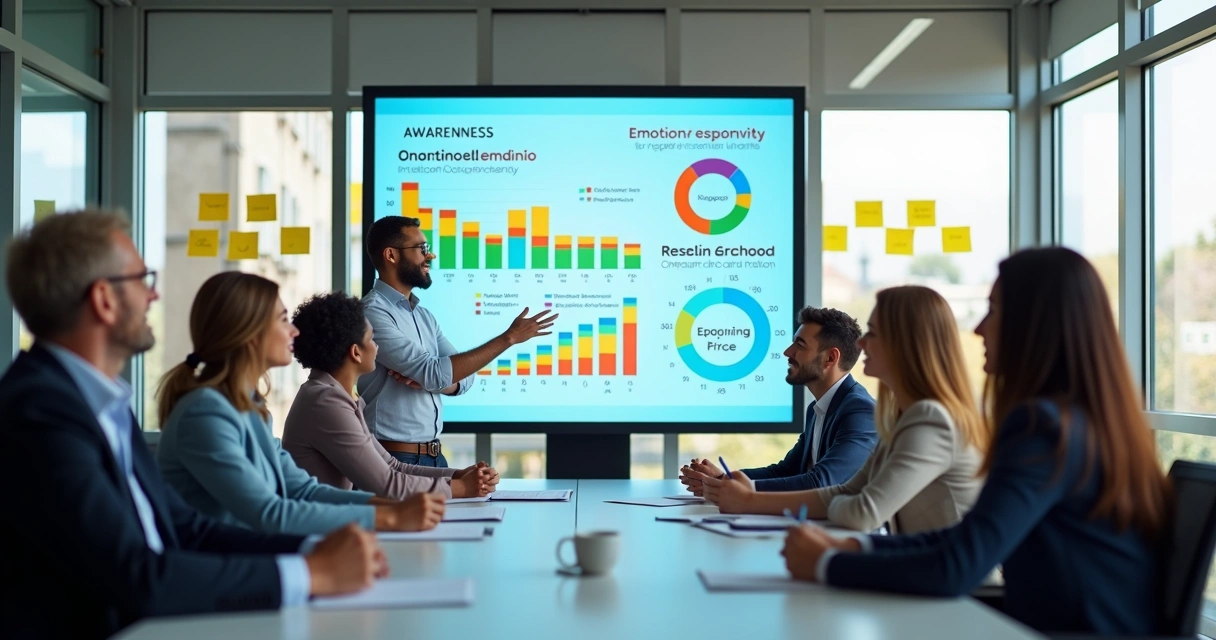
Some KPIs may look unfamiliar, but we believe they are practical, simple to track, and powerfully revealing.
KPIs for awareness and presence
Awareness is the source from which all decisions and actions flow. If we want to measure maturity, we need to ask: are people acting consciously, or on autopilot? Are leaders making time for reflection, or just reacting?
Here are a few KPIs we like to observe:
- Reflective leadership sessions per quarter: Tracking how often leaders purposely step away from execution to reflect on strategy, values, and impact.
- Presence in meetings index: Measuring time spent in meetings where active listening, mindful attention, and focused dialogue are consistently observed (maybe scored by anonymous surveys).
- Clarity under pressure: Using 360-degree feedback to rate how calmly, clearly, and effectively leaders communicate during critical situations.
These measurements seem soft at first. But we have seen teams transform when mindfulness becomes a habit.
KPIs for emotional maturity
If emotional maturity grows, entire organizations feel different. Trust deepens. Performance becomes stable. Stress drops. We have noticed that mature teams value emotional intelligence as highly as technical skill.
To measure this, consider tracking:
- Conflict recovery time: The average time it takes for teams to move from conflict back to collaboration, tracked discreetly but honestly.
- Emotional safety score: Anonymous pulse surveys gauging how safe team members feel to express concerns, make mistakes, or offer new ideas.
- Empathy ratio: Periodic feedback on how often team members feel listened to, understood, and valued (not just heard, but truly seen).
We find these numbers often predict team resilience better than most classic KPIs.
KPIs for systemic responsibility
Impact now goes beyond immediate stakeholders. In a conscious economy, maturity means recognizing how every decision shapes not just the company, but the community, environment, and customers long-term.
For this, we recommend focusing on:
- Stakeholder balance score: Are resources, benefits, and risks distributed fairly among employees, customers, communities, and suppliers?
- Long-term value index: The ratio of investments in long-lasting value (learning, well-being, sustainability) compared to short-term gains.
- Human impact review: Regular, structured reflection on how decisions have affected people—both inside and outside the organization.

These KPIs help us stay honest: are we building something that lasts, or merely racing toward the next quarter?
Measuring maturity in daily practice
Numbers alone rarely move people. Stories, conversations, and honest reflection turn raw data into learning. We believe that bringing these new KPIs into the rhythm of business means:
- Making space for frequent feedback (both qualitative and quantitative)
- Encouraging leaders to be visible learners, not just top-down decision makers
- Celebrating examples of emotional maturity, not only financial wins
- Including awareness and responsibility in performance reviews and promotions
The move to measuring maturity may seem daunting at first. But with time, we notice that people grow more engaged, cultures become healthier, and results become more sustainable.
Conclusion: The shift that changes everything
A conscious economy is taking shape. Its foundations are not in numbers alone, but in the integrated maturity of people and organizations. When we measure what truly matters—awareness, emotional maturity, responsibility—we do not abandon classic KPIs. Instead, we give them a new context.
The most prosperous organizations are those whose excellence comes from the inside out. With new KPIs for maturity, we do not simply track progress—we set the conditions for lasting, meaningful impact.
What we measure shapes what we become.
Frequently asked questions
What is a conscious economy?
A conscious economy is an approach where organizations focus not only on financial results, but also on awareness, ethics, emotional maturity, and the long-term impact of every decision. It values people, relationships, and responsibility as fundamental parts of business success.
What are new KPIs for maturity?
New KPIs for maturity include measures of awareness, emotional safety, clarity under pressure, conflict recovery time, stakeholder balance, and long-term human impact. These indicators reflect how responsibly and sustainably an organization is led, not just how much it produces or earns.
How to measure conscious business maturity?
We recommend combining quantitative and qualitative methods. This means tracking surveys, feedback, performance reviews, and team reflections on awareness, emotional safety, empathy, and responsibility. Regular review and open dialogue help turn these numbers into meaningful action.
Why do traditional KPIs fall short?
Traditional KPIs focus mainly on output, like profit and growth, but ignore the conditions that lead to sustainable success. They can miss issues like burnout, distrust, or social harm. Without measuring awareness and emotional maturity, organizations risk growing at the expense of their people and their values.
What are examples of conscious KPIs?
Examples of conscious KPIs include presence in meetings index, empathy ratio, conflict recovery time, stakeholder balance score, and long-term value index. These show how decisions, culture, and leadership directly influence both people and results.